ATV Carburetor: Clean It or Rebuild It?
If your four-wheeler sat for a while and now runs rough, the carburetor is one of the first places to look. The question most riders ask next is whether it just needs a good cleaning or a full rebuild. The answer depends on what the machine is doing and what you find when you open it up.
What a carburetor does, in one paragraph
The carburetor mixes fuel with air in the right amount for the engine. It does that through very small passages and jets, a float that keeps the fuel bowl at the right level, and a needle and seat that shut the fuel off when the bowl is full. When any of those small parts gets clogged, stuck or worn, the mix goes wrong and the engine lets you know. Many newer ATVs and UTVs are fuel-injected and don’t have a carburetor at all, so check yours before you go hunting for one.
Signs your ATV carburetor needs attention
- Hard to start, or it only starts with the choke on.
- Idles only with the choke, then dies when you push it in.
- Bogs or hesitates when you give it throttle.
- Runs rough or surges at idle.
- Gas leaking from the carburetor, the overflow tube or the airbox.
- Black smoke or a strong fuel smell, a sign it’s running too rich.
The most common cause is fuel that sat too long. Modern pump gas can go stale over a few months, and as it evaporates in the carburetor it leaves a varnish behind. That varnish narrows or plugs the pilot jet first, which is why an engine that won’t idle without choke is the classic symptom.
Why is gas leaking from my ATV carburetor?
Fuel running out of the overflow usually means the float or the needle and seat isn’t shutting the fuel off. A float stuck from varnish, a needle with a worn tip, or a bit of debris on the seat lets fuel keep flowing until it spills out. Sometimes a cleaning frees it up. Sometimes the needle and seat are worn and need replacing, which puts you in rebuild territory.
Don’t ignore a leaking carburetor. Fuel can fill the engine and get into the oil, and leaking gas near a hot engine is a fire risk. Turn the fuel valve off if you have one, and get it looked at.
When a cleaning is enough
A cleaning makes sense when:
- The machine sat for a season and the symptoms started after that.
- The carburetor isn’t leaking, or the leak cleared up once the float was freed.
- The rubber parts (o-rings, gaskets, the diaphragm if it has one) still look soft and in good shape.
- Nothing is cracked, stripped or worn.
A real cleaning means taking the carburetor off the machine, pulling the jets, and clearing every passage, not just spraying cleaner into the intake. Spraying it from the outside can help on a mild case, but it rarely reaches the pilot circuit where the trouble usually starts.
When it needs a rebuild
A rebuild replaces the wear parts: jets, needle and seat, gaskets, o-rings and seals. It’s the better call when:
- The gaskets and o-rings are hard, cracked or swollen.
- The needle and seat are worn and the carb keeps leaking after a cleaning.
- The varnish is heavy enough that jets are corroded, not just dirty.
- Someone has already cleaned it once and the problem came back.
- The carb has been off and apart before and parts are missing or mixed up.
A cleaning on a carburetor that really needs parts tends to buy you a few weeks before the same problem comes back. A proper rebuild sets it right.
What about doing it yourself?
Plenty of riders clean their own carbs, and on a simple machine that’s a reasonable Saturday project if you’ve got patience and a clean bench. Take pictures as you go, keep the small parts in order, and don’t run wire through the jets, since it can scratch or enlarge the openings. If you’re chasing a lean bog or a carburetor that floods no matter what, or the machine has multiple carbs that need syncing, that’s when a shop saves you time and frustration.
If your machine won’t start at all, the carburetor is only one possibility. Read why won’t my ATV or UTV start to rule out the battery, spark and air first. Stale fuel causes the same headaches on watercraft too, which we covered in jet ski won’t start after sitting.
Carburetor work at our Magnolia shop
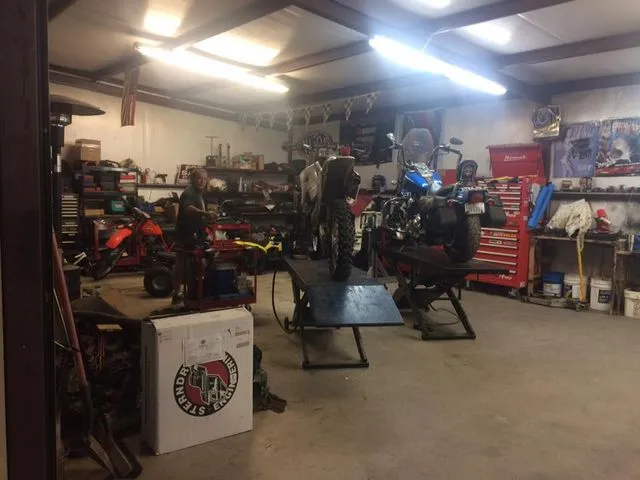
Carburetor rebuilds are on our list for both motorcycles and off-road machines. Spinin’ Wrenches is a family-owned shop in Magnolia, Texas, working on ATVs, UTVs and dirt bikes from Honda, Kawasaki, Suzuki, Yamaha, Can-Am, Arctic Cat and Polaris, along with motorcycles and jet skis. See the full list in our ATV, UTV and dirt bike repair section.
Tell us what your machine is doing and we’ll tell you straight whether it needs a cleaning, a rebuild or something else. Calls come back the same day, emails within 24 hours, and we take Venmo.